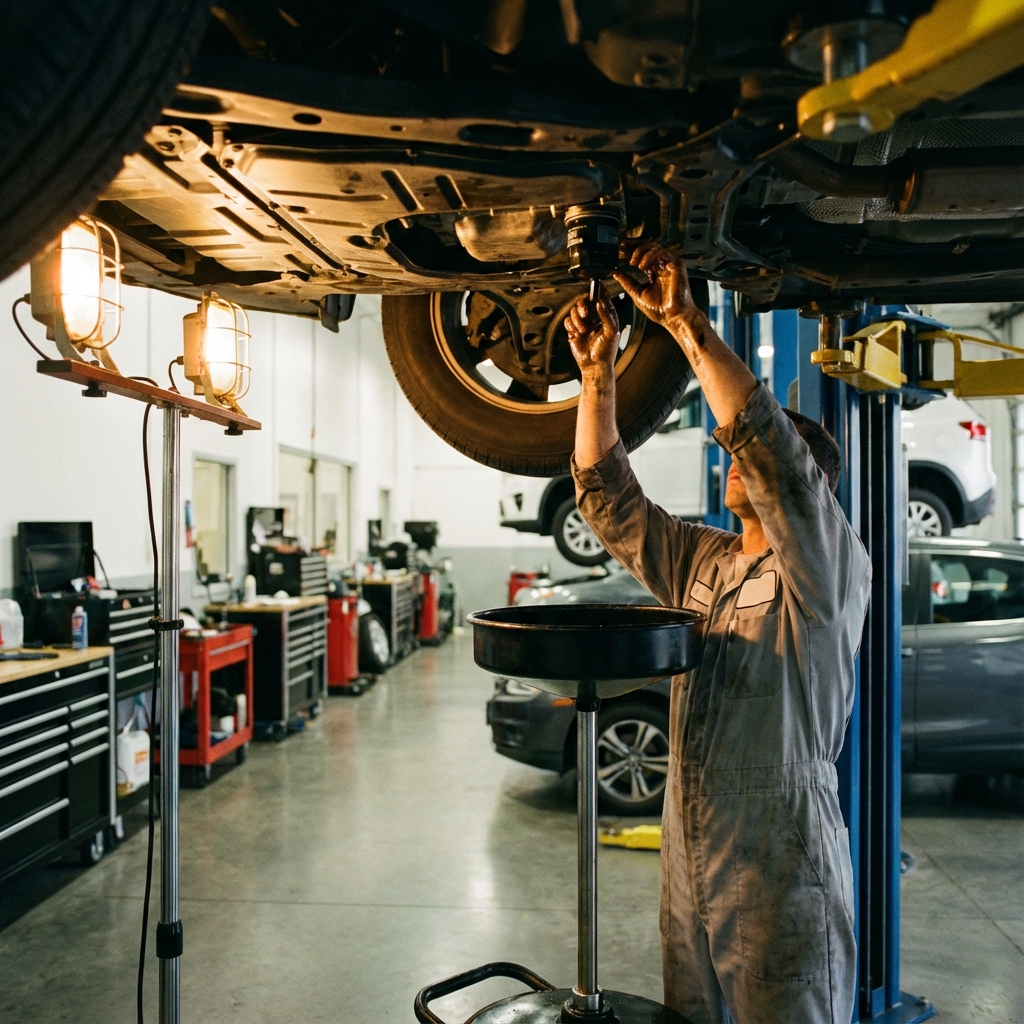
Regular oil changes are the simplest thing you can do to extend your engine's life. Yet many drivers are confused about timing, oil types, and pricing. This guide cuts through the noise.
How Often Should You Change Your Oil?
The old "3,000 mile" rule is outdated for most modern vehicles. Here's what really matters:
| Oil Type | Interval | Best For |
|---|---|---|
| Conventional | 3,000 - 5,000 miles | Older vehicles, budget-conscious |
| Synthetic Blend | 5,000 - 7,500 miles | Moderate driving, good value |
| Full Synthetic | 7,500 - 15,000 miles | Most modern cars, performance |
| High-Mileage | 5,000 - 7,500 miles | Vehicles with 75k+ miles |
📋 Check Your Manual
Your vehicle's owner's manual has the manufacturer's recommendation. Modern cars often specify synthetic oil and longer intervals (7,500-10,000 miles). Following these guidelines won't void your warranty.
Oil Change Prices
What you'll pay depends on oil type and location:
- Conventional Oil Change – $30 - $50
- Synthetic Blend – $40 - $70
- Full Synthetic – $50 - $100
- High-Mileage Synthetic – $60 - $120
- European/Luxury Vehicles – $80 - $150+ (larger oil capacity)
Mobile oil change services typically charge $10-30 more for the convenience of coming to you.
Synthetic vs. Conventional Oil
Conventional Oil
Refined from crude oil. Works fine for many vehicles, especially older ones. Requires more frequent changes. More affordable upfront.
Synthetic Oil
Engineered in labs for optimal performance. Better flow in cold weather, more stable in heat, and longer-lasting. Required by many modern engines. Higher upfront cost, but fewer changes needed.
The Verdict
If your car was built in the last 10 years, it probably calls for synthetic. Stick with what the manual says. Switching from conventional to synthetic is fine (and often beneficial), but never switch from synthetic to conventional.
⚠️ Warning Signs You Need an Oil Change
- Oil change light or check engine light on dashboard
- Dark, gritty oil on the dipstick
- Engine running louder than normal
- Burning oil smell inside the car
- Visible exhaust smoke
What's Included in an Oil Change?
A standard oil change service typically includes:
- Oil drain and replacement – Old oil out, new oil in (4-8 quarts depending on engine)
- New oil filter – Critical for filtering contaminants
- Fluid check – Brake, transmission, coolant, power steering, windshield washer
- Tire pressure check – Often included
- Visual inspection – Belts, hoses, air filter
Good shops will show you the old oil and filter, and explain any additional recommendations without pressure.
Quick Lube vs. Dealership vs. Independent Shop
Quick Lube Chains
Fast and convenient. Often have coupons. Quality varies by location. May push unnecessary upsells.
Dealerships
Know your car well. Use OEM parts. Most expensive option. Best for warranty work.
Independent Shops
Often best value. Build personal relationships. Quality varies—check reviews.
Mobile Service
Comes to you. Perfect for busy schedules. Slightly higher cost for convenience.
Book Your Oil Change Online
Compare shops, see pricing, and book in seconds.
Find Oil Change Near You →Frequently Asked Questions
How often should I change my oil?
With conventional oil, every 3,000-5,000 miles. With synthetic oil, every 7,500-15,000 miles depending on your vehicle and driving conditions. Always check your owner's manual for manufacturer recommendations.
How much does an oil change cost?
Conventional oil changes cost $30-50. Full synthetic oil changes cost $50-100. High-mileage synthetic can cost $60-120. Luxury vehicles may cost more due to larger oil capacities.
Can I switch from conventional to synthetic oil?
Yes, you can switch from conventional to synthetic at any time. It's actually beneficial for your engine. However, don't switch from synthetic back to conventional.
How long does an oil change take?
A typical oil change takes 15-30 minutes. Quick lube shops are often fastest. If there's a wait, total time may be 45-60 minutes.
What happens if I don't change my oil?
Old oil breaks down and loses its lubricating properties. This leads to increased friction, heat, and eventually engine damage. Skipping oil changes is one of the fastest ways to ruin an engine.
The Bottom Line
Oil changes are affordable insurance for your engine. Follow your manufacturer's intervals, use the right oil type, and don't overthink it. On Lokali, you can compare local oil change shops, see transparent pricing, and book your appointment online in seconds.